Wikipedia’s filmography lists Bill Duke as Director in The Twilight Zone (1980s). The table’s notes field reads: Wikipedia’s lead lists the 1985 revival among series he directed; episode titles and years are not itemized..
This timeline is in progress. Every entry is tied to a public source. Dates, episode titles, and credits we could not verify are marked as gaps — they are not filled in. Private family details are left off.
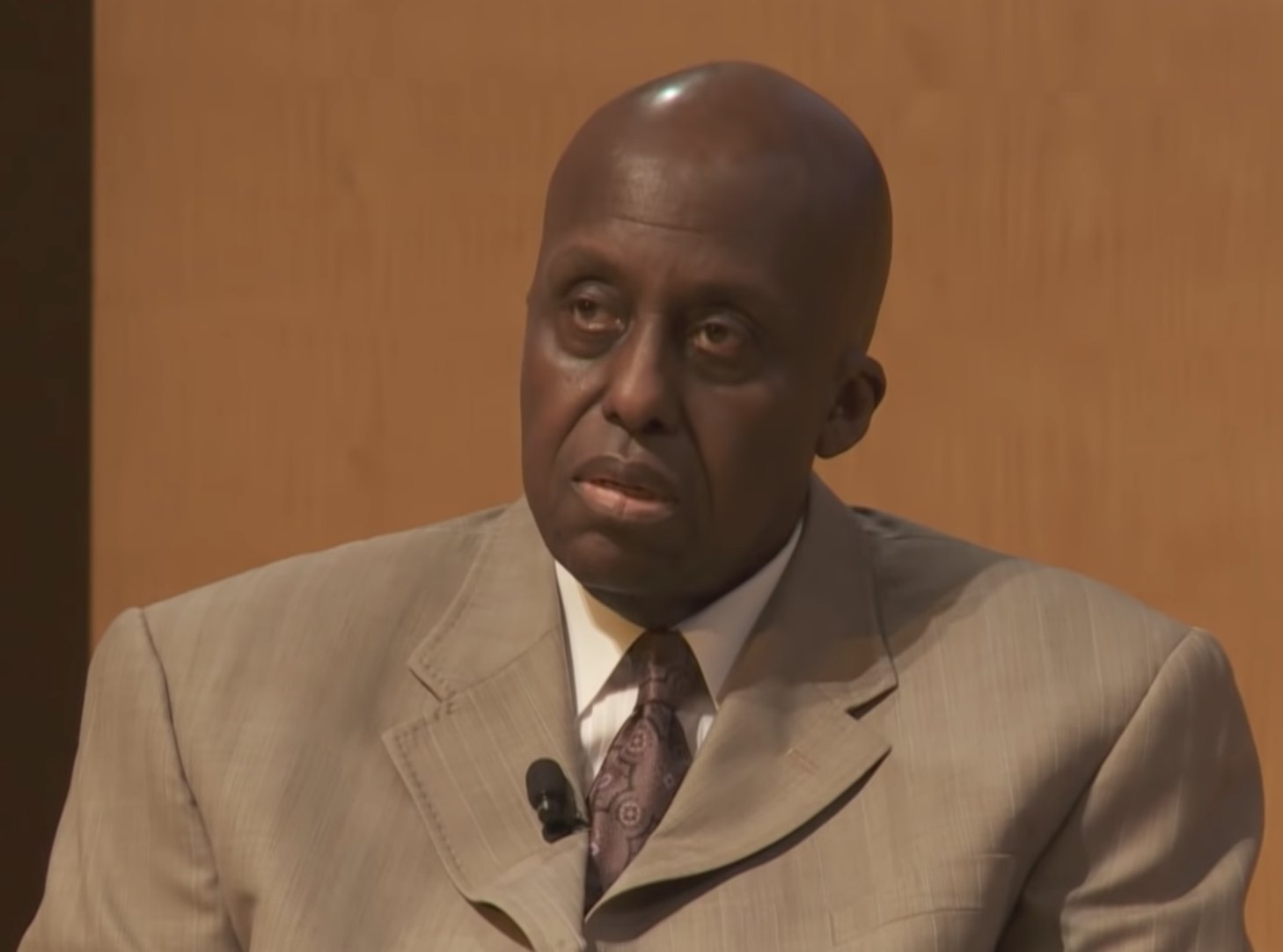
Bill Duke, 2015. Photo from the San Francisco Public Library YouTube channel, via Wikimedia Commons. License: CC BY 4.0.
1943 — Poughkeepsie and school
William Henry Duke Jr. was born February 26, 1943, in Poughkeepsie, New York, the son of Ethel Louise (née Douglas) and William Henry Duke Sr., according to Wikipedia, citing Film Reference and a archived Yahoo Movies biography. He attended Franklin D. Roosevelt High School in Hyde Park and later studied performing arts and creative writing at Dutchess Community College. A 2018 Spectrum profile says the college’s first president, Dr. James Hall, personally helped him continue on to Boston University, where he earned a B.A. after switching from plans for medical school into English education, dance, and drama. Wikipedia says he later studied at NYU’s Tisch School of the Arts and, when acting roles were scarce, at AFI Conservatory.
His feature debut was the ensemble comedy Car Wash (1976). Wikipedia highlights later roles in American Gigolo (1980), Commando (1985), and Predator (1987), often as a character tied to law enforcement or the military.
1980s — Directing television, with a gap in the episode list
Wikipedia’s lead says he directed episodes of Cagney & Lacey, Dallas, Hill Street Blues, Miami Vice, and the 1980s Twilight Zone. The directing section also lists Knots Landing, Falcon Crest, and Starman. Some early details on that page — including a story about how he first got the Knots Landing job, a count of 10 episodes, and a claim that this made him one of the first four Black television directors — are tagged “citation needed.” Individual episode titles and years are not itemized. Those remain gaps.
His directorial debut, The Killing Floor (1984), aired on American Playhouse and won the Special Jury Prize at the 1984 Sundance Film Festival, according to Wikipedia. A Rage in Harlem (1991) was nominated for the Palme d’Or at Cannes. He also directed Deep Cover (1992), The Cemetery Club (1993), Sister Act 2: Back in the Habit (1993), and Hoodlum (1997), which Wikipedia says he also produced.
Wikipedia, with citations to the Clinton White House archives, Diverse: Issues in Higher Education, Variety, IATSE, and the Directors Guild, records service on the American Film Institute board of trustees; a California Film Commission appointment under Governor Schwarzenegger; the Time Warner endowed chair in Radio, Television and Film at Howard University; and a 2000 appointment by President Clinton to the National Council on the Humanities (Wikipedia’s prose also says “National Endowment for the Humanities”). He directed the documentary Dark Girls (2011) and, Wikipedia’s “Other work” section says, Light Girls (2015). His memoir, Bill Duke: My 40-Year Career on Screen and Behind the Camera, was published by Rowman & Littlefield in 2018. Wikipedia also names him founder of the Duke Media Foundation; a confirmed official URL for that foundation was not verified here (dukefoundation.org belongs to a different organization).
2018–2025 — Later screen work and a street in his name
He recurred as Agent Percy Odell on Black Lightning (2018–2021) and appeared in Mandy (2018) and No Sudden Move (2021). News 12, cited by Wikipedia, reported that Fallkill Avenue in Poughkeepsie was renamed Bill Duke Way, with a ceremony on May 16, 2025. Deadline reported in July 2019 that he was set to direct The Power of One: The Diane Latiker Story; whether that film has been finished is a gap.